

Product Specifications
|
MODEL NO. P2-H7 |
PRODUCT TYPE LED Headlight Bulbs |
|
SOCKET TYPE H7 |
COOLING SYSTEM Five-Stage Cooling Circulation System |
|
INPUT VOLTAGE DC 9-32V |
COLOR TEMPERATURE 6500K |
|
START POWER 110W / Set |
STABLE POWER 80W / Set |
|
INPUT CURRENT 4 ± 0.4A at 13.5V |
LED CHIP QUANTITY 2 pcs |
|
LED CHIP TYPE Customized 7035 LED Chips |
POLARITY Non-polar |
|
INITIAL LUMEN 7,600 lm |
STABLE LUMEN 5,600 lm |

P2 Series H7 Wide Voltage LED Headlight Bulbs
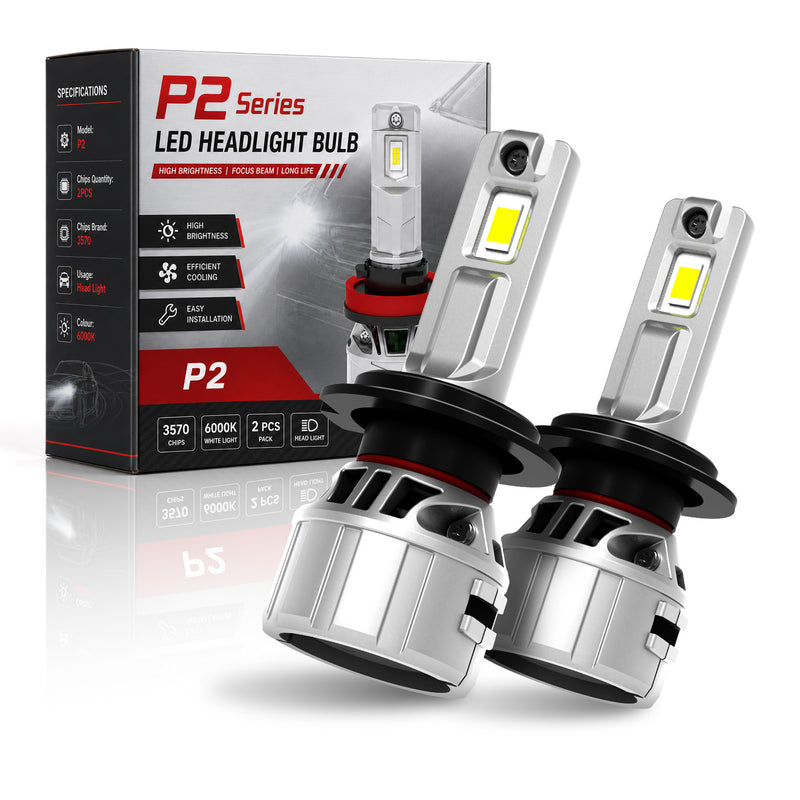
The P2 Series H7 Wide Voltage LED Headlight Bulbs combine a compact headlight construction with a DC 9-32V operating range, 6500K white light, and a multi-path thermal design. This H7 configuration is built around two Customized 7035 LED Chips and is designed for buyers looking for a clearly specified LED headlight option with stable set-level power data. The product uses 110W start power per set and 80W stable power per set, while the quoted light-output figures are 7,600 lm initial and 5,600 lm stable.
Its product presentation follows the cooling-first structure of the supplied promotional materials. Heat management is introduced before lighting output because temperature control is central to maintaining a compact, high-power LED headlight construction. The cooling components below are presented in the same sequence as the supplied detail panels.

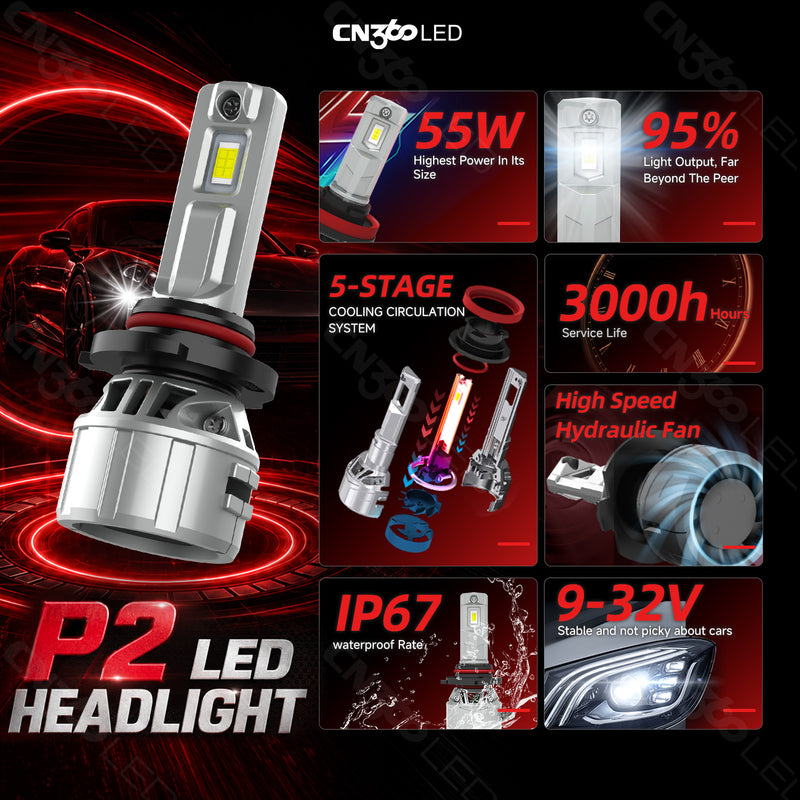
Five-Stage Cooling Circulation System
The P2 cooling concept uses several connected heat-transfer paths rather than relying on one cooling component alone. Heat is guided away from the LED area, moved through the internal structure, and released through active airflow and external cooling surfaces. The four visual cooling components below explain the physical parts shown in the promotional layout without separating them into numbered first-stage or second-stage labels.
Silicone Heat Dissipation and Superconducting Copper Tubes
The cooling route begins around the LED source, where silicone heat dissipation supports heat transfer away from the light-emitting area. Superconducting copper tubes then carry that heat through the bulb structure. This combined path helps connect the LED core to the larger cooling assembly, creating an organized route for thermal movement instead of concentrating heat in one small area.

Double Ball Bearing Fans
Double ball bearing fans create active airflow through the rear cooling section. As air moves through the housing, it helps carry heat away from the internal thermal path and toward the exterior cooling surfaces. The fan structure works together with the copper heat-transfer route and the finned body, making active airflow part of the overall circulation system rather than an isolated feature.

Aerospace Aluminum Housing and Cooling Fins
The aerospace aluminum housing provides a durable external structure for the cooling system. Cooling fins increase the surface area around the body so accumulated heat can be released more effectively as air passes through the rear assembly. This finned aluminum section gives the thermal system a larger area for heat dissipation while retaining a compact H7 headlight form.

Circular Heat Pipe Cooling
A circular heat pipe adds an encircling heat-transfer route around the cooling structure. It supports the circulation concept by helping distribute heat through another path within the rear assembly. Together with the silicone heat-dissipation section, copper tubes, double ball bearing fans, aluminum housing, and fins, this circular component completes the visible cooling architecture shown for the P2 Series H7 product.

Customized 7035 LED Chips and 6500K White Light
The H7 version uses two Customized 7035 LED Chips to produce 6500K white light. This color temperature gives the product a clean white appearance suited to LED headlight presentation. The chip quantity and chip type are stated separately so buyers can identify the actual LED configuration without treating the chip-size designation as a public chip brand. The focused chip arrangement works with the H7 bulb structure to support controlled forward illumination.


High Power Lighting Innovation
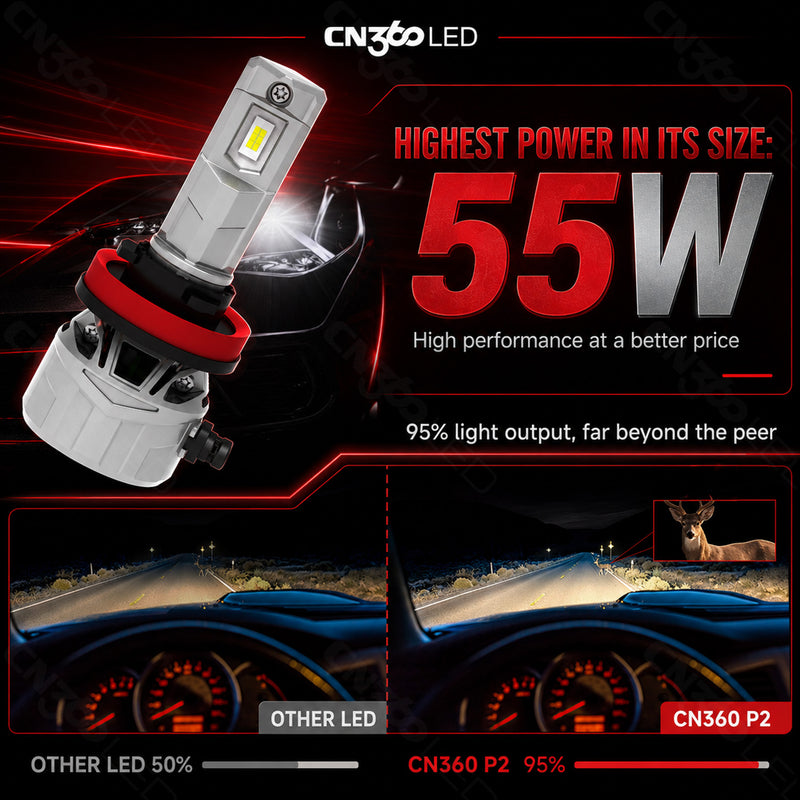
The quoted electrical figures are 110W start power per set and 80W stable power per set. Stating both values makes the operating information clearer for product comparison and wholesale communication. These are set-level figures, not per-bulb figures. The cooling architecture is positioned before this section because the heat-transfer system supports the compact construction required for stable LED headlight operation at the stated power level.


Focused Road Illumination
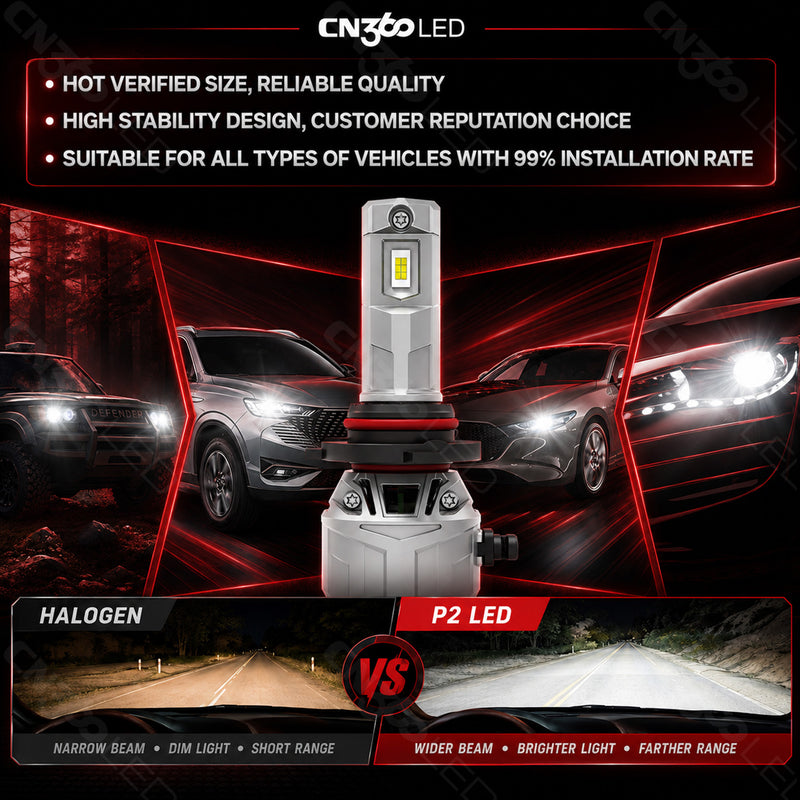
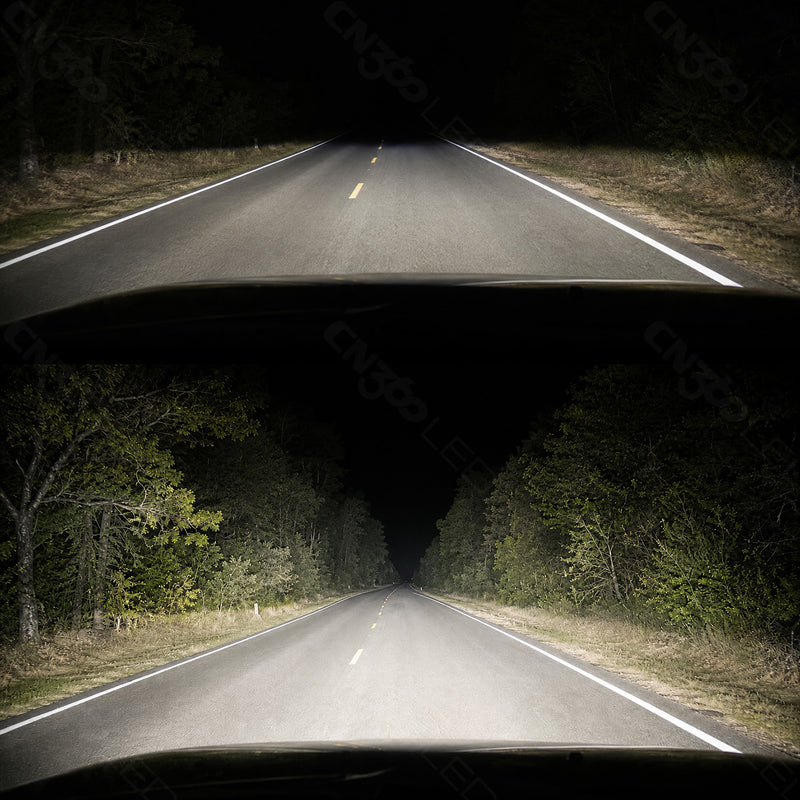
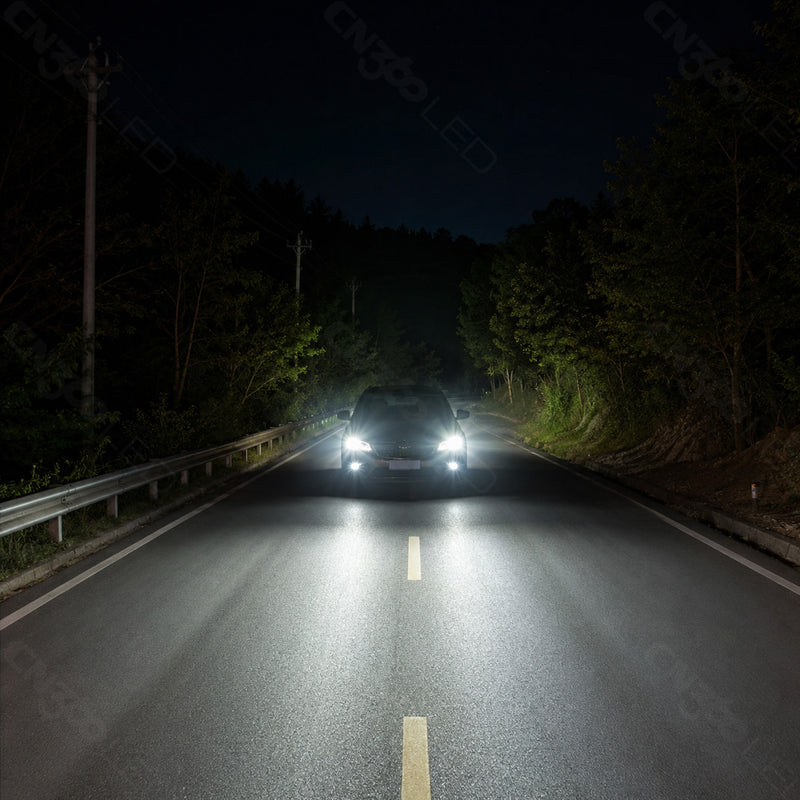
The H7 model is quoted at 7,600 lm initial output and 5,600 lm stable output. These figures are shown as initial and stable lumen values only; they are not presented as high-beam or low-beam values because no beam-specific lumen split was supplied for this H7 version. The LED arrangement is intended to support clear forward road illumination with 6500K white light.

Quick Plug and Play Installation
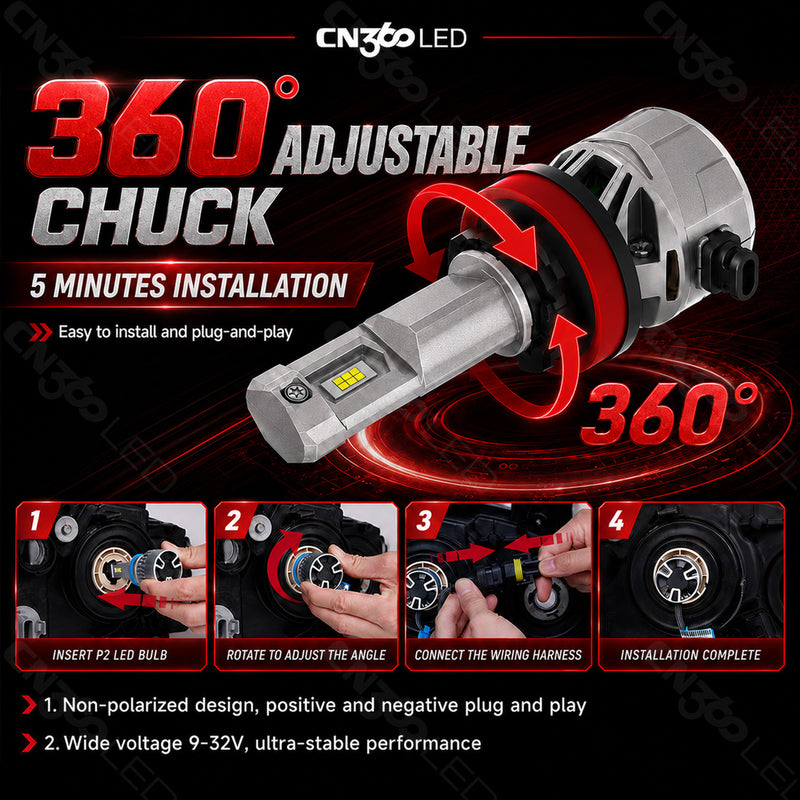
The H7 socket design supports a straightforward plug-and-play installation process. The bulb is intended to be connected through the matching H7 headlight position without adding unnecessary installation complexity to the product presentation. Before ordering or installation, buyers should still confirm the vehicle's socket type, headlamp space, and applicable local requirements.

Non-Polar Design and DC 9-32V Operation
The non-polar design removes the need to distinguish between positive and negative plug orientation during connection. Combined with DC 9-32V operation, this provides a practical electrical configuration for compatible H7 headlight applications. The wide voltage range is the single differentiating feature used in the product name, while the non-polar connection remains a separate functional advantage within the product detail.

Compact H7 Headlight Configuration
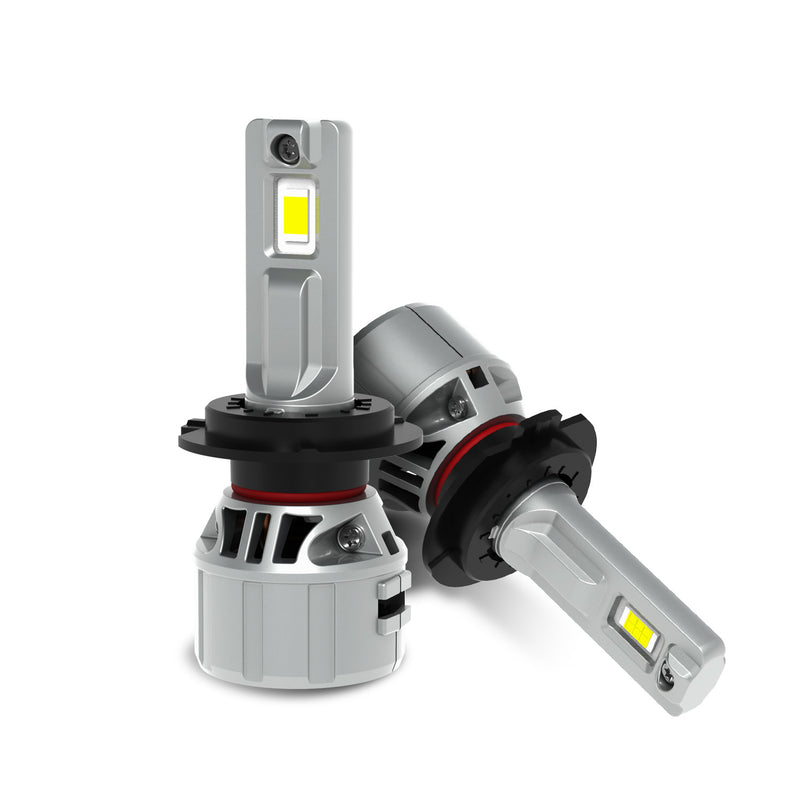
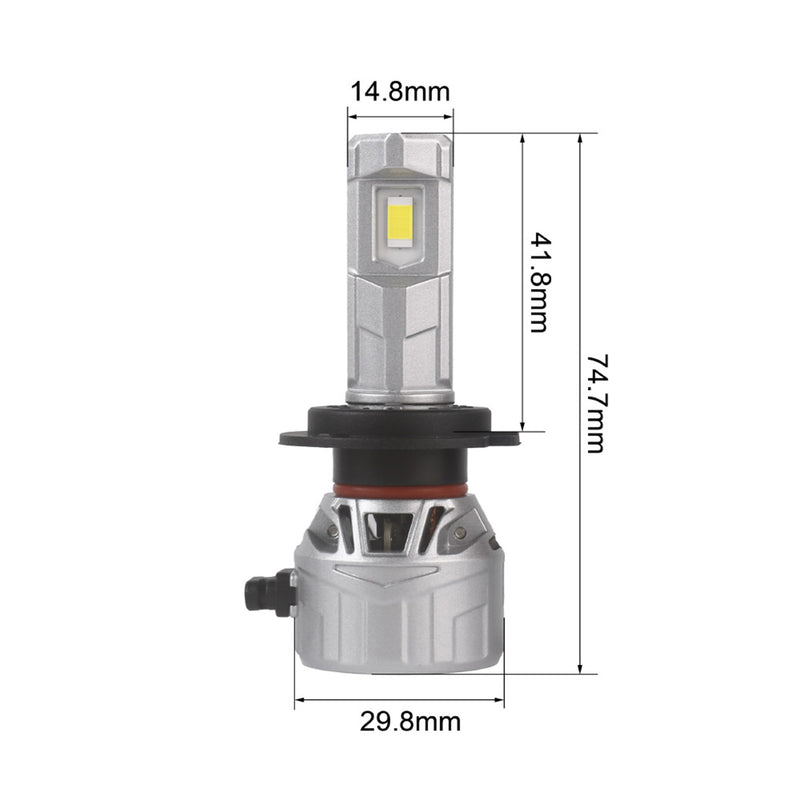
The P2 Series H7 is designed around a compact LED headlight body with integrated thermal components. Its housing, fan assembly, heat-transfer parts, and H7 connection are organized as one complete bulb structure. Vehicle headlamp clearance varies, so socket compatibility and available installation space should be confirmed before final selection.