

Product Specifications
|
PRODUCT TYPE LED Headlight Bulbs |
MODEL NO. M5-H1 |
|
LED CHIP TYPE Customized 3570 LED Chips |
LED QUANTITY 2 LEDs |
|
OPERATING VOLTAGE DC 12–24V |
INPUT CURRENT 2.7 ± 0.3 A @ 13.5V |
|
BEAM ANGLE 360° |
COLOR TEMPERATURE 6500K |
|
POLARITY Non-Polar |
MOUNTING COLLAR Fixed, Non-Adjustable |
|
INITIAL LUMINOUS FLUX 1,781.11 lm |
STABLE LUMINOUS FLUX 1,198.78 lm |
|
INITIAL POWER 35.83 W |
STABLE POWER 27.01 W |

M5 Series H1 Compact LED Headlight Bulbs
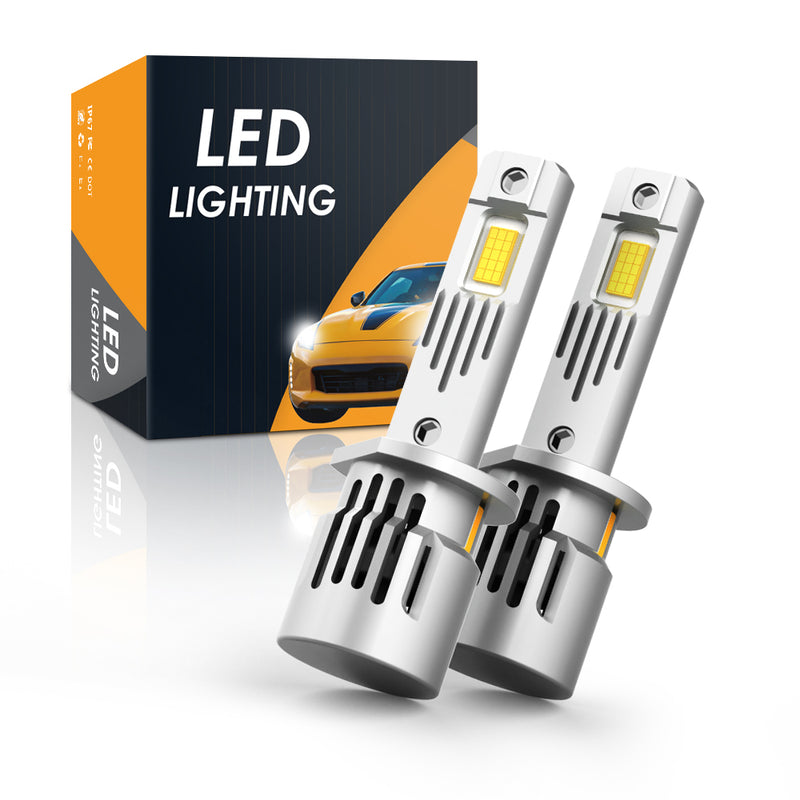
The CN360 M5 Series H1 combines two customized 3570 LED chips, 6500K white illumination, and a compact cooling assembly. Its fixed mounting collar and non-polar electrical design support use in compatible H1 headlamps, with a specified operating range of DC 12–24V.
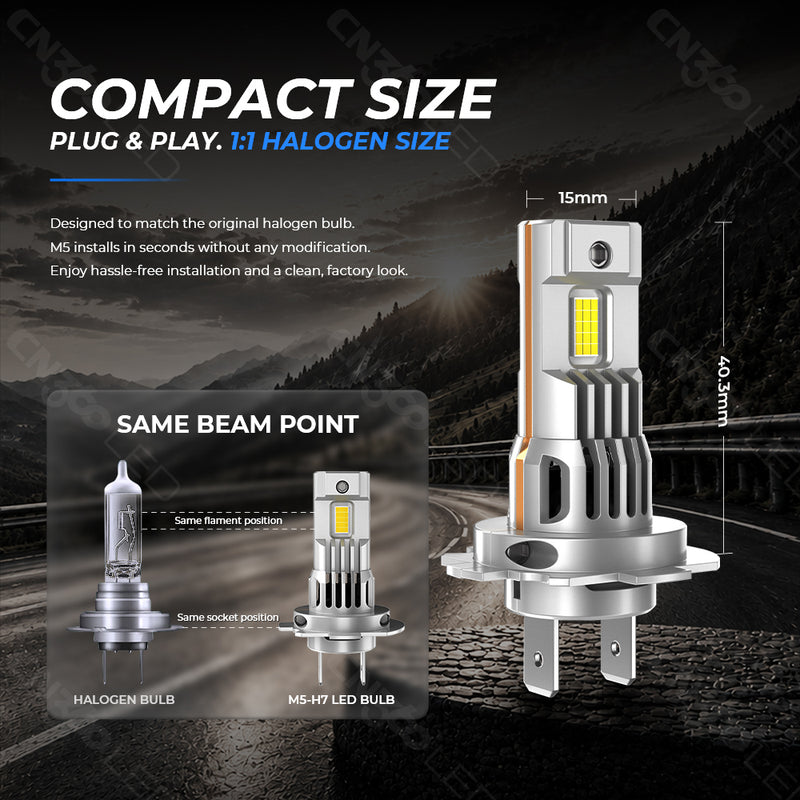
Compact Replacement-Bulb Structure
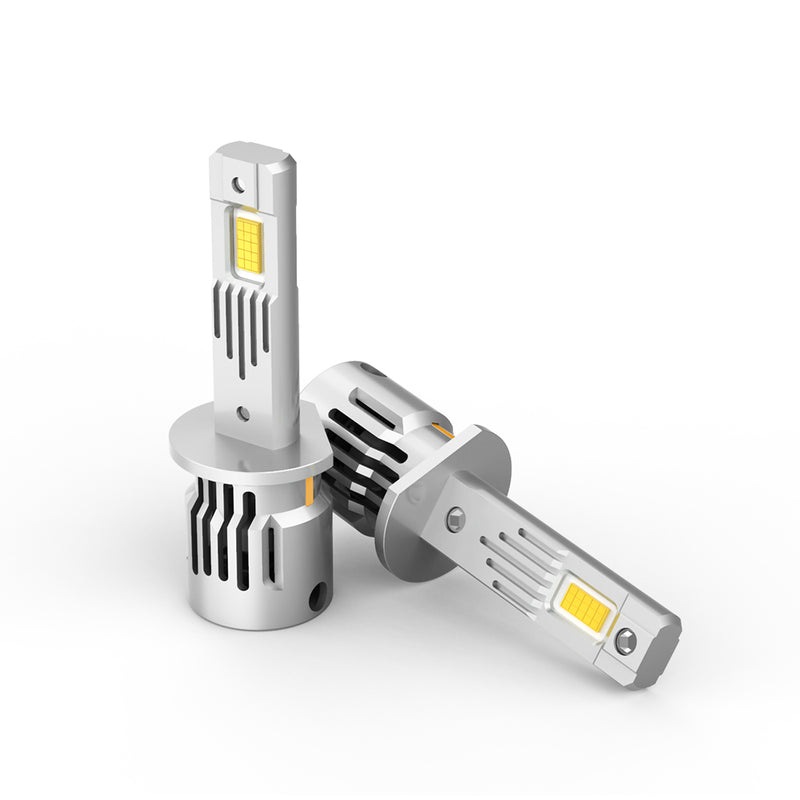
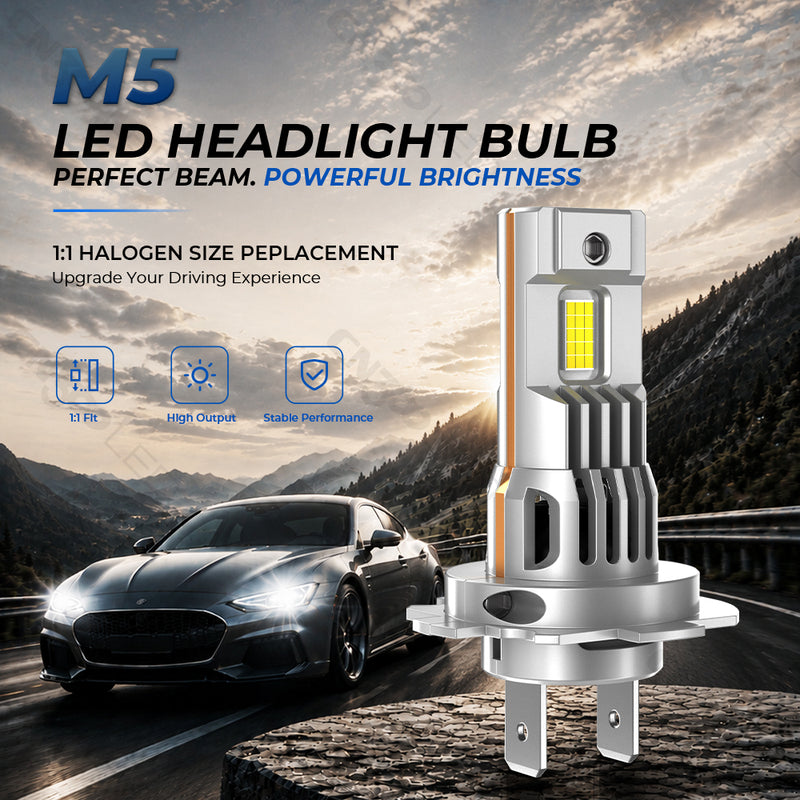
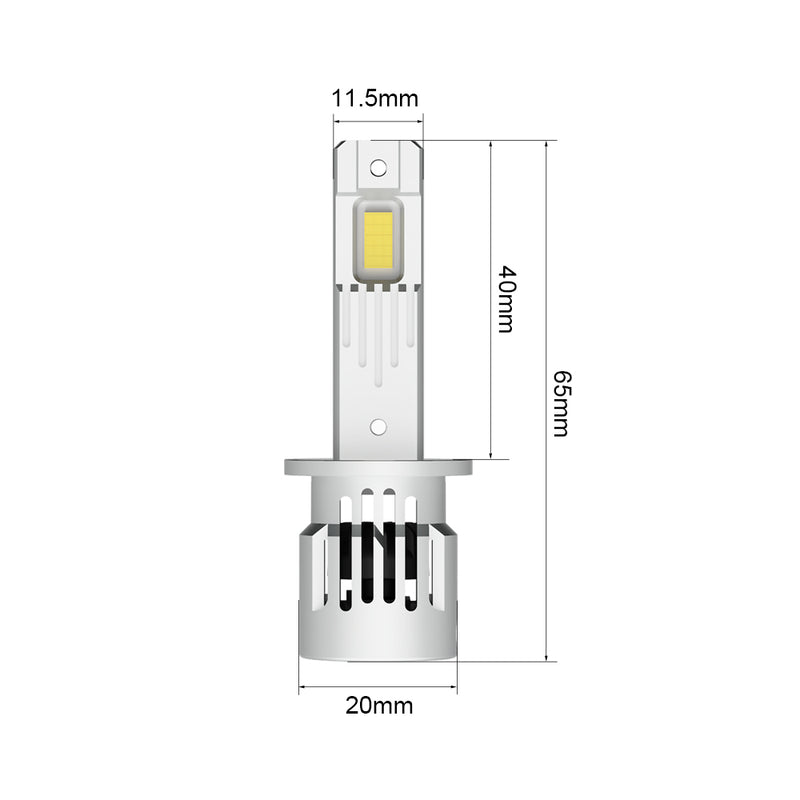
The M5 brings its lighting blade, mounting position, and cooling section together in a compact body. The narrow emitting section sits above the collar, while the cooling components remain integrated into the assembly. This layout follows the general form of a replacement headlight bulb for a matching lamp holder.
The H1 collar is fixed and non-adjustable. Match the original bulb specification, retention system, electrical connection, and available rear clearance before fitting. The non-polar design simplifies polarity matching electrically, while correct seating establishes the physical position of the LED sources within the headlamp.

White Light and Model-Specific Performance
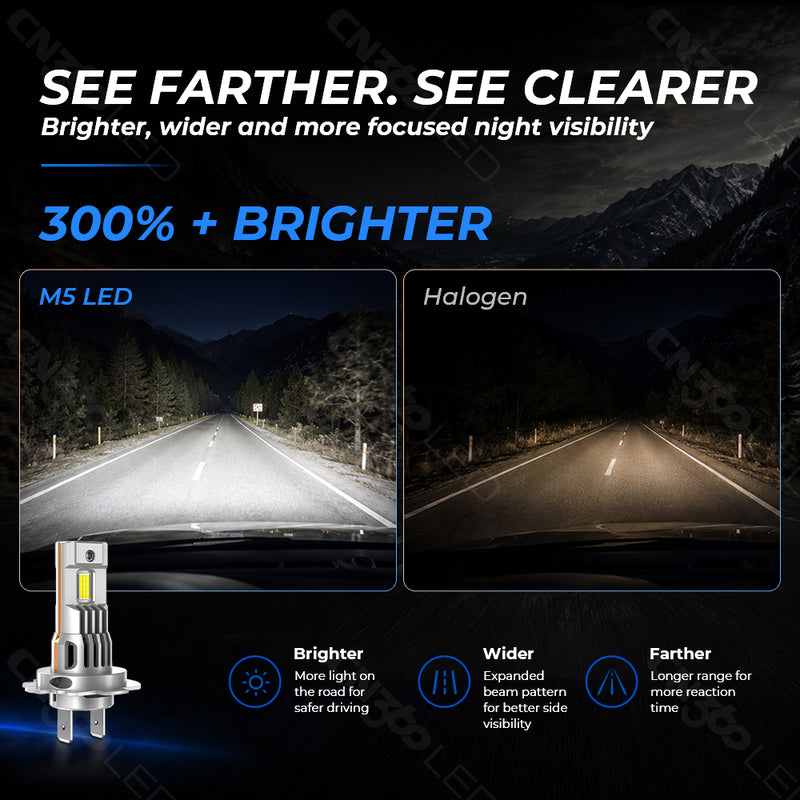
Initial luminous flux is specified at 1,781.11 lm with an initial power of 35.83 W. Stable output is 1,198.78 lm at 27.01 W. These separate values describe the initial and stable operating states of the H1 version rather than assigning an unsupported beam function.
The color temperature is 6500K, and the listed beam angle is 360°. The vehicle's reflector and lens shape the emitted light into the final road pattern. Check the resulting beam and headlamp aim after installation to confirm that the selected bulb suits the intended lighting position.

Fast Heat Dissipation
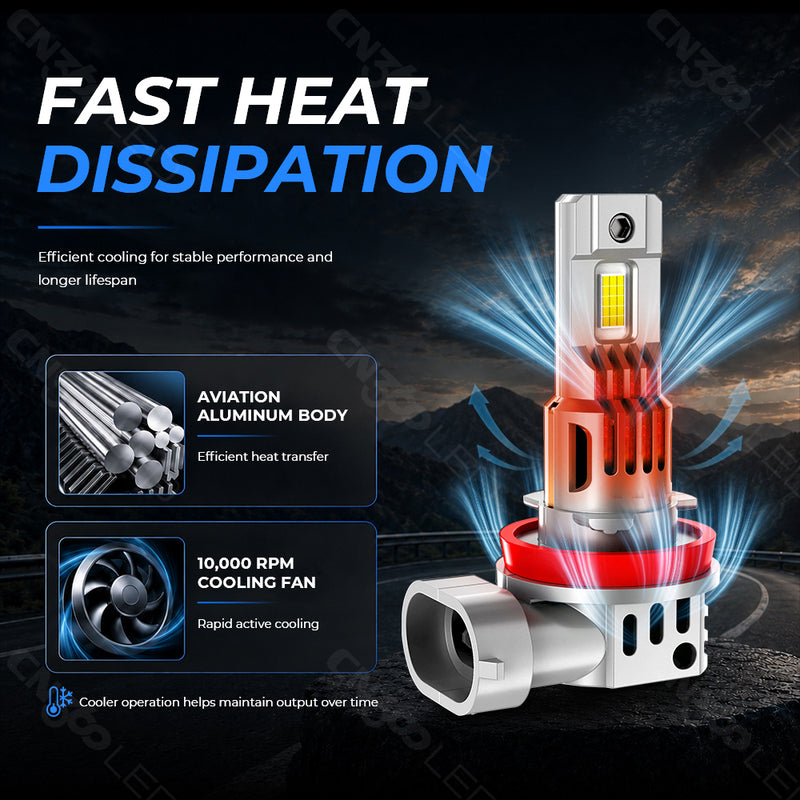
An aluminum body and integrated fan support heat transfer and airflow around the cooling section. Heat moves from the LED area through the metal structure toward the exposed surfaces. The finned body provides additional cooling area within the compact profile of the bulb.
The fan and airflow openings need room to operate as intended. Keep wiring clear of the cooling section and check that the headlamp cover closes normally after installation. The bulb should remain securely seated without pressure from the cover or interference with nearby hardware.

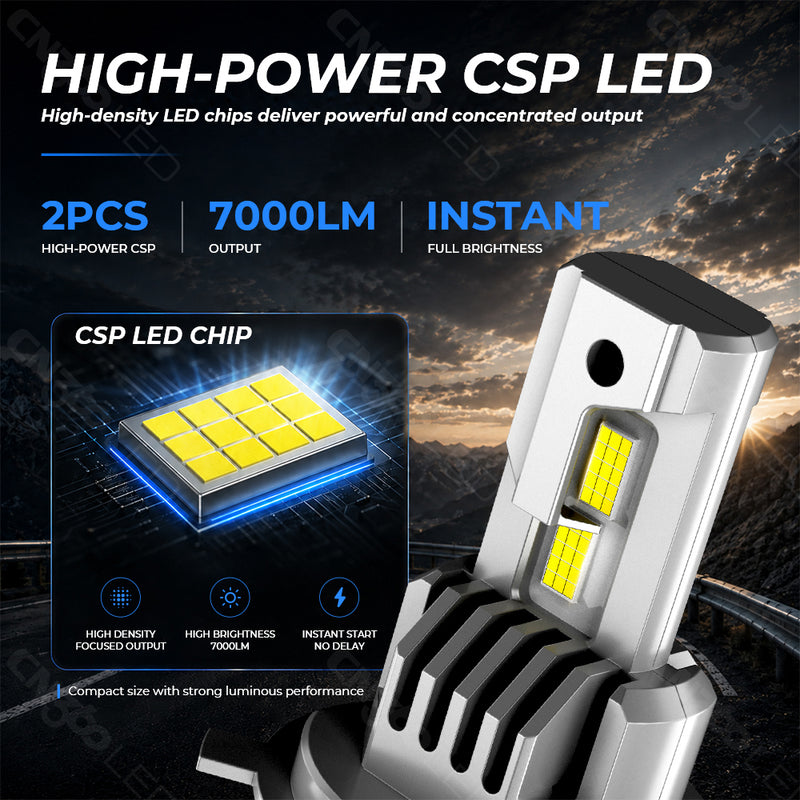
Two Customized 3570 LED Chips
This H1 version uses two customized 3570 LED chips arranged on the lighting blade. The compact LED section works with the body structure to combine illumination and heat transfer in one assembly. Its position within the original housing is part of the headlamp's overall optical arrangement.
Light distribution depends on the LED position, reflector geometry, lens design, and bulb orientation working together. Secure engagement of the fixed collar helps maintain this relationship. Select the appropriate H1 application and assess the completed beam in the vehicle's actual headlamp assembly.

Electrical Operation and Housing Fit
The M5 H1 operates within DC 12–24V, with an input current specification of 2.7 ± 0.3 A at 13.5V. Match these values to the intended headlight circuit. The initial and stable output figures provide the corresponding performance reference for this model.
The original headlamp housing, cover, and seals remain part of the complete installation. Retain them where required by the vehicle and confirm that the connector and retention hardware fit within the available space. Correct housing closure is part of checking the finished assembly.

H1 Fitment within the M5 Range
Choose this version according to the original H1 bulb and headlamp specification. Confirm the electrical connection, mounting arrangement, and cooling clearance before replacement. After fitting, check normal operation through the vehicle's controls. Secure mechanical fit, unobstructed airflow, and correct optical alignment bring the separate parts of the installation together for the intended headlight use.